
Guides & Advice
Timber vs. Composite Fencing: What Lasts Longer in Irish Weather?
Irish weather is hard on garden fencing. Persistent rain, damp ground, and long stretches without much drying sun all take a toll on materials that aren't built for it. Timber and composite are the two most common fencing choices for Irish gardens, and the right one depends on how much maintenance you're willing to take on versus how much you want to spend upfront.
Timber Fencing
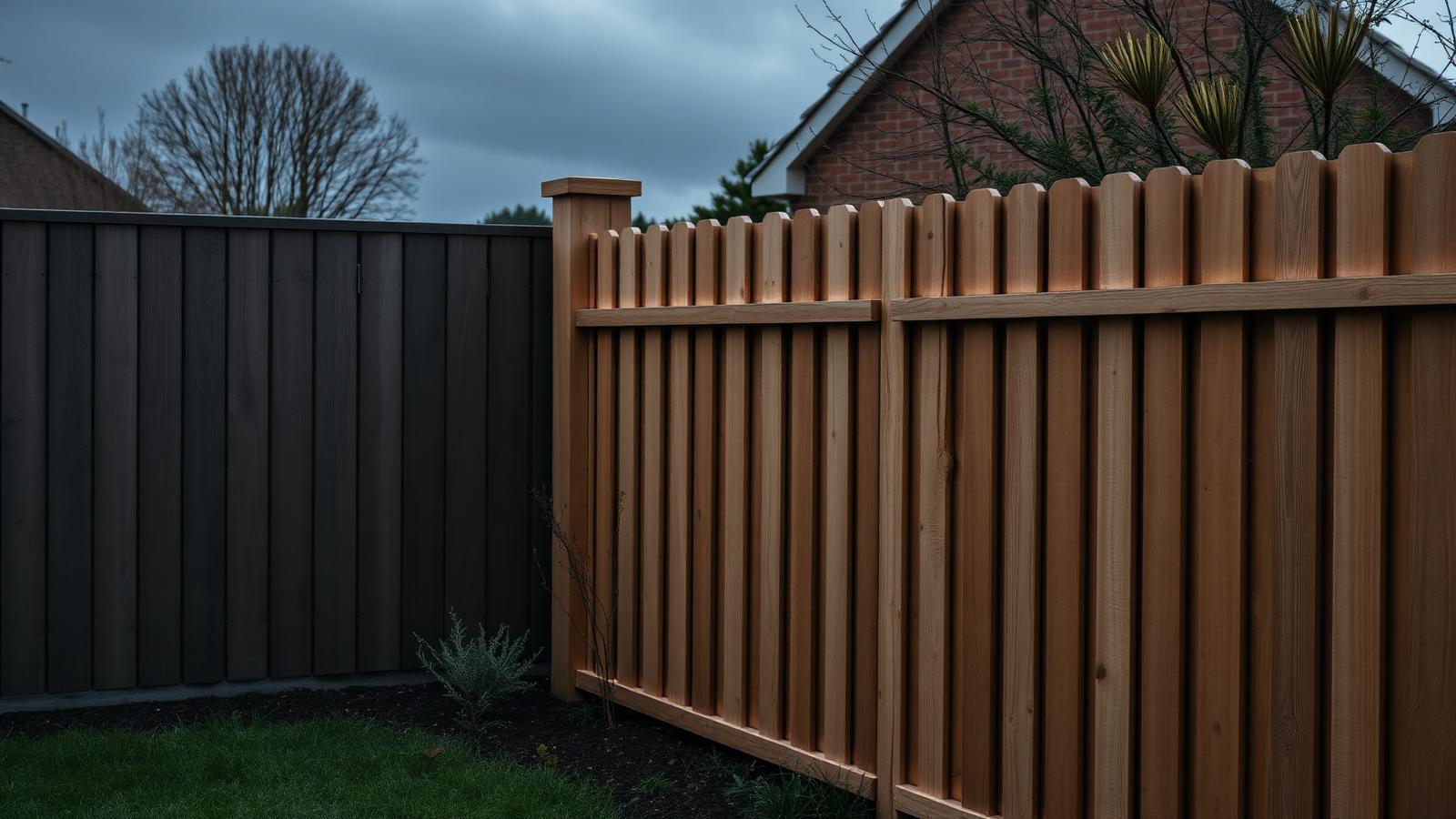
Timber is the classic choice, and it's still the most accessible option on price. It gives a natural, traditional look that suits most Irish gardens, and it can be stained or painted to match whatever finish you want.
The catch is upkeep. Timber needs regular treating, roughly once a year, to stop it absorbing moisture, warping, or rotting at the base where it meets the ground. Skip that maintenance for a couple of seasons and it shows: panels start to grey, warp, or develop soft, damp patches, particularly along the bottom rail. Well-maintained timber can last well, but it does ask for ongoing attention.
Composite Fencing
Composite fencing is made from a mix of wood fibres and recycled plastic, and it's built specifically to deal with the problems timber struggles with. It doesn't absorb water the way timber does, so it doesn't warp, rot, or need treating.
That comes at a higher upfront cost than timber, but the difference shows up in maintenance over time. There's no annual staining or treating, the colour holds rather than fading or greying, and it keeps its shape through wet Irish winters far better than timber does. For anyone who wants a fence that looks the same in five years as it did on day one without doing anything to it, composite is built for exactly that.
Vinyl and PVC Fencing
Vinyl, also called PVC fencing, is worth a mention alongside these two. It's highly weather resistant with minimal upkeep, similar to composite, and its clean lines tend to suit more modern properties. It's another low-maintenance route if timber's yearly treating isn't appealing.
Cost Over Time
Timber wins on upfront price every time. But it's worth thinking about total cost rather than just the initial spend. Between the cost of stain or paint, the time spent applying it every year, and the likelihood of needing to replace panels sooner if maintenance slips, timber's lower starting price narrows over the years it's in the ground. Composite costs more to install but effectively removes ongoing maintenance costs entirely.
Which Suits Your Garden?
If upfront cost is the priority and you don't mind an annual treating routine, timber is a solid, proven choice that suits most Irish gardens. If you'd rather pay more now and never think about it again, composite is the better long-term option, particularly for larger boundary runs where the maintenance time on timber adds up.
Whichever material you go with, how the fence is installed matters as much as what it's made from. Posts set to the correct depth in concrete are what keep a fence standing straight through winter storms, regardless of the panel material chosen.
If you're weighing up timber against composite for your garden, we're happy to talk through both, show samples, and help you land on the right choice for your budget and how much upkeep you want to take on.
Need this done at your property?
Get a free quote from Farrell Exteriors — we'll talk through options, show samples and give you a straightforward price before anything is ordered.
Ready to Upgrade Your Outdoor Space?
Call Farrell Exteriors today for a free quote on paving, fencing, driveways, turf lawn, power washing, resealing, windows and doors, or landscape design.